Showing posts with label Book review. Show all posts

Sunday, 28 January 2018

Book Review: Talking Images: Idioms - by Lucy Holmes and Sharlene Matharu

I am delighted to be writing a review of a newly published photocopiable teachers' resource book called Talking Idioms: Images, written by two of my Lake School of English colleagues.

The talented joint authors are Lucy Holmes and Sharlene Matharu and they have been working at the Lake School of English for a considerable number of years between them now.

Below an image reproduced with kind permission from the Lake School.  It shows the two authors with their book called 'Talking Images: Idioms'. This resource book is created for teachers by two practising and very experienced teachers.  You can read more about them here.

All the original and brilliant artwork contained in the book has been drawn by Sharlene Matharu herself, seen below on the right.


Before I begin the review, I would just like to mention that the Lake School is a hotbed of incredible creativity, talent and innovation. This is thanks to the amazing support and encouragement of the two hardworking and inspirational directors, Carmel Engin and Susan Barber, (seen in the image below).........


..........and the warm, friendly atmosphere created by the school by the teachers and staff, and of course, inspired by the many students from around the globe!


'Talking Images: Idioms'  has been primarily designed as a 'pick up and use' resource book, and I honestly believe it is and will be the perfect addition to any busy staffroom.  It contains a wealth of idioms, all based around practical themes, and using images to gain maximum communicative effect.  All the materials have been trialled at the Lake School beforehand, and given the seal of approval by both students and teachers alike.

I have recently had the pleasure to have a good look through the contents of the book, which contains 12 thematically based units. Each lesson aimed at B1 level and above, would ideally take 45-60 minutes of classroom time.

I was most impressed by the following aspects:


    What I liked most of all was the wide variety of lesson activities contained in the book.  They would appeal to new or indeed, experienced teachers, to enjoy using and I have added a few of them below:


      Each lesson has a set amount of clear, logical stages, and thus it makes it an engaging book for any teacher to work through.

      I can't wait to try some of the lessons out in real time, and hopefully this will happen in the very near future :-)

      The authors have included a free sample chapter for people to view, and it is available via their website here:

      http://talkingimagesidioms.com/sample-chapter

      Once again I would like to extend my warmest congratulations to Lucy and Sharlene, a dynamic duo who have worked so hard to achieve this dream of self publishing their materials.

      I would highly recommend this excellent teachers' resource book, and it is a truly......


      ........achievement for them both.

      I hope I have given teachers, who are reading this post, a little taster of what the book is for and about.

      You can find out all the details of how to purchase it via the writers' own website 'Talking Images: Idioms'

      http://talkingimagesidioms.com/

      There is also a great competition to win a signed copy for free, and details are on the Lake School of English Facebook page:


      Lucy and Sharlene have created their own 'Talking Images: Idioms' Facebook page where you can view comments and updates as they occur:

      https://www.facebook.com/talkingimagesidioms

      To enter the competition, you need to like their Facebook page, and post a funny sentence, using your favourite idiom.  If your entry makes them laugh the most, you could be .....


      If you do win a copy, please DO make sure to add a comment here to let me know!

      Best of luck!

      Sunday, 2 June 2013

      Connecting Online for Instruction and Learning: International Perspectives


      I am absolutely delighted to announce the recent publication of a printed book called Connecting Online for Instruction and Learning: International Perspectives.  I am one of the 14 co-authors who collaborated on this book over a period of time from 2012 - 2013, under the gentle guidance of our inspirational editor Dr Nellie Deutsch. The book contains 312 pages, full of international perspectives based around aspects of elearning and instruction.

      A Dream Team
      I would like to say a huge thanks to Dr Nellie Deutsch for making this dream project happen, and also heartfelt thanks to all my fellow fabulous co-authors, for being a dream team to collaborate with.

      'The authors of the book are: Janet Bianchini, Karen Blumberg, Dr. Christel Broady, Dr. Michele Drechsler, Jennifer D. Klein, Dr. NIki Lambropoulos, Alain Gourdin, Sophi Michael Danis, Antonio Nazzaro, Lenandlar Singh, Kemul Gaffar, Dr. Ludmila Smirnova, Diethild Starkmeth, Steve Tuffill, J. Aleta R. Villanueva, Dr. Revathi Viswanathan, Jason West.'

       I enjoyed every single aspect of this quite ambitious undertaking, and I am so proud to be a part of it all!!


       Screenshot image of book cover taken from Amazon site here. Copyright @ Nellie Deutsch 2013

       'The chapters were written by 14 presenters of Connecting Online (CO12) for instruction and learning live online conference on the first week of February 2012. The free online conferences for educators and by educators started in 2009. The conference takes place on WizIQ Education Online on the first weekend in February of each year'.

      Enlightening
      The process of working collaboratively with educators from around the world was an enlightening experience.  We each undertook in small groups of 4-5, to proofread and edit each other's book chapters, give comments and advice on how to improve the chapters.  Dr Nellie Deutsch allowed us to collaborate freely within our groups, and gave us gentle reminders for when deadlines were due. She oversaw the whole process from start to finish, and finally published it for us. I and the whole team of co-authors are indebted to her for her invaluable guidance and mentoring of us all.

      Below a screenshot glimpse of the first few chapters:


      I have just ordered my own copy from Amazon and I am very excited about reading all the book chapters and learning from each of my fantastic co- authors, who are experts in their field.

      Now I can't wait for the postman to deliver my copy.  My only worry is that the Italian postal system can be rather unpredicatable at times, so fingers crossed!!

      Currently if you click on the image of the book here, you can read a free sample first chapter....

      My chapter is entitled: Teaching Idioms Effectively with Web 2.0 Tools. It is based on the background to my original slideshare presentation below:


      I had originally created a Glogster, as at first I thought the book would be an ebook. It is in fact a printed publication.


      Once again, many thanks to Dr Nellie Deutsch and all my fabulous fellow co-authors for making this dream project come true!!

      Monday, 27 February 2012

      Packtpub:Moodle 2.0 Book Reviews

      I have the great pleasure of reviewing two books on Moodle published very recently by Packtpub. I will outline my thoughts briefly on each book individually as set out below. I would like to stress that I term myself as a lay person with regards dealing with Moodle, and therefore my opinions are purely personal and based on ease of understanding of the content within each book reviewed. With an ever increasing demand by "Moodlers" for more information about this versatile Virtual Learning Platform / Environment, Packtpub offers an array of books specifically geared to enlighten would be users / seasoned Moodlers alike.

      Book Review One:Moodle 2.0 Course Conversion Beginners' Guide

      Written by Ian Wild and published by Packtpub as a second edition in November 2011, Moodle 2.0 Course Conversion Beginners' Guide provides a valuable and insightful guide to converting your teaching materials to the latest edition of Moodle 2.0. At 368 pages long, with nine clearly defined chapters, divided in two parts, the information showcased is comprehensive and easily managed.

      Moodle 2.0 Course Conversion Beginners' Guide is primarily aimed, but not exclusively, at teachers / educators who are beginners in dealing with Moodle. The e book demonstrates in a very comprehensible manner how easy it is to create a course entirely online using the teacher's own worksheets and materials. My opinion is that this is a very practical and useful guide to have for any teacher contemplating shifting their work from a paper based / non digital format to a highly sophisticated and modern online medium.

      The introduction quotes the notion of a "fast" learning curve for readers of this book, and this caught my eye. Although the book is packed full with useful information, it is indeed condensed in a very efficient way and therefore easy to read in manageable chunks with clearly defined headings to lead the way. My feeling is that objectives can be achieved in a short space of time by following the considerable amount of tutorials, screenshots and clear explanations included in the book..

      What I liked...

      The step by step approach with ample screenshots was greatly appreciated, and made the information much more easily accessible.

      I particularly liked the Pop Quiz to recycle information digested, and there were many examples of this feature in each of the chapters. I found myself keen to see if I could answer the questions quickly to prove to myself that I had taken in the information.


      In addition, the "Have a go hero" feature is a great touch, which sets practical challenges. It also gives you ideas for further experimentation of materials covered, as viewed in the screenshot below.

      I also liked the practical "Word of caution" sections, and I learned some useful tips for things to avoid doing, such as not logging on to Moodle as two different users.

      The frequent "What just happened?" question was useful in breaking up chunks of information, and served as a useful review of the content. The "Time for action" heading also served a useful purpose for running through procedures.

      Would I recommend it?
      Moodle 2.0 Course Conversion Beginners' Guide seems to do what it says on the blurb and cover and as a result, I would recommend this book to any teacher / administrator / tutor embarking on adding files and materials to Moodle.

      I would love to own a hard copy of this book as well, and that for me is a very high recommendation!!

      You can download Chapter 5, a free bonus chapter for you to view the contents. Have fun!

      Book Review Two:Moodle 2 for Teaching 4-9 Year Olds Beginner's Guide

      My second Packtpub book for review is Moodle 2 for Teaching 4-9 Year Olds Beginner's Guide. It is written by Nicholas Freear and it was published in October 2011. It consists of 332 pages divided into ten main chapters.

      The title Moodle 2 for Teaching 4-9 Year Olds Beginner's Guide intrigued me straightaway, as the idea of using Moodle with such young learners seems to be very 21st century indeed. This reflects a sign of the times, which is increasingly geared towards blended learning.

      Who is this book for?
      According to the official blurb, "This book is aimed at teachers of children aged 4 to 9 who wish to integrate the Moodle open source virtual learning environment into their teaching. It assumes a basic knowledge of the Web but no prior knowledge of Moodle, although it is expected that you will either have Moodle already set up in your school, or a friendly IT technician who can do it for you."

      My Opinion
      This book contains a comprehensive and useful amount of information, which is geared for teachers of this particular age group. It was a little bit technical in some parts for me, but I am sure this would be appreciated by most teachers dealing with Moodle. The author mentions throughout the book to ask for in-house technical support if a teacher doesn't feel confident enough to download relevant plug-ins and so on.

      Moodle 2 for Teaching 4-9 Year Olds Beginner's Guide contains insightful sections on creating games and quizzes and these activities are what most children find enjoyable. The step by step instructions and references are very clear, and can be followed easily with the ample amount of excellent screenshots provided.

      I particularly liked Chapter 3, Telling Stories, which outlines various creative writing projects, which young learners would find entertaining. Specific chapters are devoted to Fun Games, Spot the Difference and Interactive Puzzles, thereby resulting in a huge bank of diverse activities for the keen teacher to develop and enhance any Moodle course for young to very young learners.

      Would I recommend it?
      I feel that Moodle 2 for Teaching 4-9 Year Olds Beginner's Guide does what it sets out to do very well. If I were teaching this age group, I would certainly want to read through it in order to take advantage of all the exciting features Moodle 2.o offers as a learning platform.

      You can find out more information about it on Nicholas Freear's unique Facebook page.


      You can also listen to the author outlining what his book is about on the video on his Facebook page. Link
      You can download a free sample chapter - Chapter 4, Spot The Difference, from the Packtpub page link here.

      Moodle 2 Administration
      Packt has recently published another Moodle book as well, titled "Moodle 2 Administration". You can read more about it on their website.

      Please note:I have received a free e-copy of each of the two books reviewed in exchange for writing the reviews in my own time. The reviews are based purely on my honest and personal perspective. I hope the reviews will give you some insight into the essence of the books.

      Thursday, 10 March 2011

      Moodle - Packtpub March offers!

      Are you in the Mood-le for some fabulous offers via Packtpub? Packt is currently running a Moodle March campaign this month on its website. As part of the campaign, Packt is offering an exclusive discount on all its Moodle books to celebrate the forthcoming publication of the Science Teaching with Moodle 2.0 book. Here is the link which explains it in detail: Moodle March. A percentage of all sales go towards the Moodle Trust. You can read more about this here.

      Update on Latest Packtpub Moodle Books
      Packtpub has just published 2 new books on Moodle. Have a look at the links below.


      Moodle 2.0 First Look - Book review
      Soon I will hopefully be posting a review of the latest book by Mary Cooch called "Moodle 2.0 First Look". Watch this space!

      Tuesday, 30 November 2010

      Book Review of Moodle 1.9: The English Teacher's Cookbook


      I am very pleased to post this book review of Moodle 1.9: The English Teacher's Cookbook by Silvina P. Hillar, published in July 2010 by Packtpub. It consists of 80 fantastic and ready-to-use recipes to achieve some great results.

      According to the blurb contained in the packtpub site "This cookbook provides a practical, step-by-step guide to building a complete reading comprehension, writing, and composition course in Moodle 1.9 starting with simple activities and ending with complex ones. It covers many features and techniques in order to allow you to organize your ideas to improve writing using Moodle as a virtual learning platform".

      The big question is ...
      does Moodle 1.9:The English Teacher's Cookbook actually do what it sets out to achieve? I believe it does, and in the process, I certainly learned a lot more about Moodle features and in addition, new Web 2.0 tools, which particularly interested me. I believe the blurb gives you a lot more practical information about the content of the book, so I will base my review on a few of the features that I particularly liked.

      The book provides very clear and thorough step by step instructions on how to accomplish the many and various tasks that it demonstrates. I had a lot of fun trying out the different techniques. In particular I liked the "Let's Moodle it!" refrain that came before getting down to doing each task for yourself.
      Below, I couldn't resist creating a Tagxedo cloud of key words in the shape of a cockerel.


      The book starts off with easy to use activities, which will enhance your students' reading and writing skills and leads to more complex ones. The use of images plays a big role in creating the activities in Moodle 1.9:The English Teacher's Cookbook and there are many excellent practical examples.
      I found out how to create a comic strip using MS word and adding silhuettes and speech bubbles like my basic example below. With more practice, I hope to create some more comic strips which I will add to this post in the future.


      I really enjoyed creating this comic strip from Superherosquad. I learned how to do this in Chapter 8, "Creating New Sceneries", which showed fun and versatile ways to enhance writing skills.


      You can print the strips straight from the web site and you can download the comic as a pdf. I created a screenshot and then saved the image to my computer, so it's fairly straightforward to use. I really like it!!

      In chapter 9 I learned more about the design and upload of different mind maps, Venn diagrams or tree diagrams, which can be uploaded into the Moodle course. This prompted me to start experimenting more with the Smart Art feature on the Microsoft Word programme and led me to do a few digrams for my Powerpoint presentations as demonstrated in my Language in Motion:teaching with the flow ppt, for example.

      Below you can see some of the mind mapping tools mentioned and demonstrated in The English Teacher's Cookbook.


      You can have a look at the sample copy Chapter 5 -Creating Stories using Twitter and Facebook.
      This is a topical chapter, which shows you how to use and embed these 2 popular social networking sites into your Moodle course. Again, the thorough and detailed step by step instructions help you to create and design interactive activities, which are bound to engage your learners! This chapter will give you a very good idea of how the rest of the book is written.

      Conclusion
      I would highly recommend Moodle 1.9:The English Teacher's Cookbook, because it contains a lot of lovely practical lesson ideas which can easily be incorporated into a Moodle course. I found some of the ideas a bit complex, but on the whole, as demonstrated above, I was able to follow the instructions and create some very nice visuals.

      Please note:I have received a free e-copy of the book in exchange for writing this book review in my own time. I really enjoyed reading it and I am very happy to own a copy as a really useful reference guide to dip into for inspiration.

      Coming soon!
      I look forward to reading and reviewing "Moodle 2.0 First Look" by Mary Cooch. This will happen hopefully in the next few weeks, so watch this space!!

      Saturday, 4 September 2010

      Zen and the Act of Teaching by David Deubelbeiss


      Every once in a while a book comes along that you wish had been published much earlier. Zen and the Act of Teaching is such a book. Written by David Deubelbeiss from EFL Classroom 2.0. and published by Lulu, this Publish On Demand (POD) book is very philosophical and reflective in nature. I believe it is a must-have source of inspiration for teachers beginning their careers, teachers in mid-career, or a very rich and motivational resource for veteran teachers. That indeed says a lot. It contains something for every teacher at whatever stage or level they may be at. David has written a very informative post on how to go about self-publishing such a book here.

      What I like most is the clear, simple, classic feel of Zen and the Act of Teaching. The cool grey/white background on each page has an image of 5 tranquill-looking pebbles, which for me immediately symbolise inner peace, calm and contentment. The scene is therefore set for an enriching and truly thought-provoking personal voyage of discovery and contemplation. This well-written book is also a self-help guide written for all teachers to reflect upon their teaching practice and outlook. It contains useful nuggets of information, and prompts, which can be easily digested and then acted upon. It could also be successfully incorporated into a teacher training course. I know I will definitely be using it and showing it to teachers to discuss in November when I do a Teachers' Refresher course at the Lake School of English, Oxford.

      "Be the change you want to see in the world" by Mahatma Ghandhi is one of my favourite quotes from the book. I like it because it is a powerful and motivational set of words. Only you yourself can change what you want to be and do. Nobody else can do it for you. It's good to read such words often in order to remind oneself of what can be achieved, only if you put your mind to it. I will definitely try to enact this principle!

      The Socratic notion of the "good" resonates with me personally, because it is important to always question why we do things in the classroom. Each of our actions have far-reaching consequences.

      "The best teacher teaches from the heart, not from the book" is worth remembering if you ever need to abandon the coursebook in the middle of a lesson, because something else has evolved spontaneously from the students themselves. Don't be too rigid. Be flexible. Follow your instinct.

      The book contains a rich source of questions for discussion and reflection, and there is space on alternate pages to write a journal and consider the pieces of wisdom imparted. There are also some lovely examples of short poems which act as a catalyst for reflection.

      As it's the beginning of the new term in most areas around the world, this book will definitely inspire you and get you off to a flying start! Also, in terms of your own CPD, it is an excellent way to re-assess and check that you are going in the right direction. As a veteran of many years teaching myself, I loved reading Zen and the Act of Teaching because everything in it is practical and most of all, achievable. I know it will help to make me the best teacher I can be.

      Monday, 21 June 2010

      Book Review: Moodle 1.9 Theme Design: Beginner's Guide

      I am delighted to have the opportunity to review the recently published Moodle 1.9 Theme Design:Beginner's Guide. The book is written by Paul James Gadston and it is published by Packt Publishing.

      Moodle stands for Modular Object-Orientated Dynamic Learning Environment and it is a free open-source e-learning software platform, also known as a Virtual Learning Platform or Learning Management System (LMS). Moodle is the fastest growing VLE in the world and it is used successfully by educators and universities around the globe. It is a platform to be reckoned with and hence there is a growing need for books such as Moodle 1.9 Theme Design:Beginner's Guide, which is designed specifically to educate teachers, ICT technical personnel and Moodle administrators about the many features involved in creating a theme design effectively and with ease.

      As I still consider myself a relatively inexperienced Moodle user, I was intrigued to find out if this book actually delivers what it says ie "This is a Beginner's Guide, with plenty of worked examples, step-by-step visual guides, and explanations". Namely, at the end of reading Moodle 1.9 Theme Design: Beginner's Guide, would I be confident enough to create, design and then install a Moodle theme to my own particular specifications?

      The book is divided into 2 main parts, with the first five chapters giving a very clear outline of the Moodle VLE and its features, including the software that is necessary for effective use. There are 4 Multiple Choice Pop Quizzes in the first 5 chapters of the book. These are effective for reviewing what you have learned. The second part, chapters 6 to 10, deals with showing you how to create a moodle theme from scratch, how to customise it and then implement it successfully.

      Does Moodle 1.9 Theme Design: Beginner's Guide deliver its promise?

      I believe it does so in a very thorough and practical, no-nonsense manner. The whole process of theme design is in fact quite detailed and rather technical, with a lot of HTML code involved. I personally tend to struggle with such code. However, the constant reinforcement of the whole process is something I appreciate in this book, and I personally found the numerous examples of screenshots to be particularly helpful and an essential feature to help my understanding. There is a brief outline of the contents at the beginning of each chapter, which serves as a practical checklist. The "What just happened?" heading consists of a quick review after each chunk of information is explained. This is a nice feature and is good for highlighting the material the reader has to take in. The "Have a go hero" heading challenges the reader to try out the lesson tips. The summary at the end of each chapter allows for consolidation of information taught.


      The frequent bold "Time for action" headings in each chapter give excellent instructions for tasks to be completed by the reader. This heading is used very frequently and makes it very clear that specific "Hands on" practice is necessary. The tasks are based on getting to grips with manageable chunks of information at a time.

      The Glossary of useful terms, and the section on acronyms included at the back of the book are very good to facilitate the understanding of a lot of terminology, which maybe is not commonly known. For example, I had never heard of the term "skinning" before, and I found out it is interchangeable with "theming", which refers to the look and feel of a web application. I also learned about CSS, which stands for Cascading Style Sheets. Most key words are written in bold in the main text to make them stand out more, and I liked this particular style.


      Would I recommend you go out and buy this book? If theme design is of paramount importance to you, and I believe this undoubtedly is a vital element of any Moodle course, then I would honestly say yes. Moodle 1.9 Theme Design:Beginner's Guide gives you a whole array of practical and very thorough sound advice and guidance to help you create your special and unique theme. As a general book to read on this particular aspect of Moodle, it is also well worth reading to gain a more in-depth analysis.

      If you want to create your own Moodle theme design from scratch in the future, this book would definitely be well worth buying as it covers all you need to know in a very clearly explained, in-depth and easily understood format. Have a look at a free sample of the book, Chapter 3 "Customizing the Header and Footer".

      Happy reading!

      I have received a free e-copy of the book for me to write a review, which is based purely from my personal and honest perspective. I hope the review will give you some insight into the essence of the book.

      Saturday, 19 June 2010

      Multi-Tasking:The Way to Keep Busy!

      Picture above shows Multi Janets Tasking!

      The past few days I have literally been making hay while the sun shines, getting up unfathomably early, in order to take the dogs for a walk, then hack away at the ever growing jungle at the back of our home, sorting out 3-4 compost piles, building my huge haystack in the middle of the land ready for a future blog post (I'm not joking!). In addition, I have had to constantly check up on the 5 incorrigible "Amigas" and sort out the never ending trail of devastation that they leave in their wake. Several cucumber plants trampled, tomato plants decimated, pepper plants pecked at and well, a lot of other misdemeanours. Anyway, apart from all these daily tasks, I have been as busy as a bee online!

      As this blog serves as a personal diary for me as well as my personal development portfolio, I would like to share links to the following posts and say a big thank you to everybody that is mentioned.

      A Journey in TEFL:Guest Post

      My dear friend Eva Buyuksimkesyan from A Journey in TEFL, invited me to do a guest post on her blog a few days ago. I didn't hesitate in accepting. I wrote the post "The A - Z Files: The Secret to Organising your TEFL Life! in a very short time, because I felt inspired by the subject and I wanted to share a few of my secrets to keeping organised.

      On this post I revealed that I have started a wikispaces A- Z folder where I keep all my bookmarks in alphabetical order of subject. It is a private and personal reference sheet for me but you are welcome to browse through it and check out the links if you wish. I won't be accepting contributors to this venture for the time being as it is purely intended for my own CPD and for ease of finding sources at the drop of a hat.

      OUP ELT Global Blog:Guest Post
      I have just written a guest post for OUP ELT Global blog called "Renew the Passion and Go with the Flow!". I enjoyed writing this post very much, as it made me think what useful tips I could share with teachers. Please do share your thoughts with other practical tips you have in the comments section on the blog post. That would be great!

      Teaching Village:What you Can Learn from Barbara's PLN Quiz 2 (June 18th)
      I was delighted to be one of the 4 winners of Barbara Hoskin Sakamoto's first PLN quiz What you can learn from my PLN -1 (June 13th), which I took last week. Barbara now has her 2nd quiz up and running on her Teaching Village blog and you can find it on What you can learn from my PLN Quiz - 2 (June 18th) . I am thrilled that one of the five posts selected for this week's quiz includes a post from me called Do It Your Way. Please do try out the quiz and you could win some lovely chocolate and goodies!! I'm looking forward to receiving mine in Oxford soon. Thank you very much Barbara for creating such an inspiring way for us teachers to learn more about each other and to share resources.

      Teacher Reboot Camp:Future Guest Post
      All in all, a very busy but rewarding few days. Why has there been such a flurry of guest posting activity? What has motivated me? What has urged me to get out of my Comfort Zone? There is a clue in Shelly Terrell's inspirational The 30 Goals Challenge Continues This Summer post on Teacher Reboot Camp. After I have checked up on my menagerie, done a bit more land work, I will be writing a post for Shelly, one of the most inspirational people you could ever hope to meet. I haven't met her, but I feel as if I know her. Watch Shelly's space!


      Enlarge this document in a new window


      Moodle 1.9 Theme Design: Beginner's Guide
      I am putting the final touches to my next book review -Moodle 1.9 Theme Design: Beginner's Guide by Paul James Gadsdon published by Packt Publishing. Watch this space!


      Tuesday, 18 May 2010

      You do NOT want to read any further

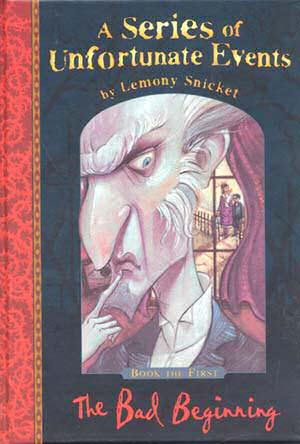
      "With all due respect," so goes one of my favourite lines in the "A Series of Unfortunate Events" books by Lemony Snicket, which have enthralled me as an adult. I was hooked, all line and sinker from the moment I read the following banner which had the fateful words:

      Well, human nature being what it is, of course I fell for that one, and so I did read further and I was so gripped, that I went out and bought the first book "The Bad Beginning" immediately. It told an unhappy tale about three extremely unlucky children, the Baudelaire siblings, Violet, Klaus and Sunny, the baby. The first book was so bad, nay dreadful, that I had to rush out and buy the second one called The Reptile Room. That was even worse, so of course I bought the third book The Wide Window, which was even more depressing and lugubrious. I was a sucker for punishment. And so it went over the years until I had read and collected all unlucky 13 of them. The last one was aptly called "The End" Although the series is aimed at 8+ years of age (very clever 8-year-olds me thinks!), the stories are in fact written in such a beguiling and grown-up manner, with so many long words, such as "herpetologist", that as an adult, I found the stories very entertaining and yes, in a way, brilliant and frightfully amusing.

      The Elusive Lemony Snicket
      Harper Collins Publishers have published an interview with the enigmatic author Lemony Snicket here.

      Below is a video of the author on Youtube talking about the new free online edition of The Bad Beginning.


      You can browse inside "The Bad Beginning" and all the books via HarperCollins the publishers.. Be prepared, as it makes for extremely unpleasant reading!

      All Our Yesterdays
      Yesterday I revealed the series which got me into trouble at school. Today, I have openly revealed what has gripped me as an adult. How about you? Which series of books do you enjoy reading? I would love to know. Please do tell!

      Saturday, 27 March 2010

      Moodle 1.9 Teaching Techniques: Book Review

      It is my pleasure to review another e-book from Packt Publishing called Moodle 1.9, Teaching Techniques by William Rice and Susan Smith Nash. This review is based entirely on my personal point of view. I am not an expert in Moodle. I undertook this project in order to learn more and improve my knowledge of the subject, both from an active learning perspective and from a future teaching perspective.

      Moodle 1.9 Teaching Techniques was first published in January 2010. There are 11 chapters and at 216 pages, it makes for fairly compact reading. Who is the book aimed at? Well, the overview states that it is suitable for university and professional teachers. There is an assumption that you have knowledge of the Moodle platform's basic features, and that you have "some proficiency" with Moodle. This book is not intended to be used as a guide on how to use Moodle per se, but as the title suggests, it is a comprehensive guide on how to adapt the many and varied features of Moodle to customise and personalise your course design. One of the facets I liked about the book is that it guides you from the teacher's point of view and also gives you an insight into how the modules are viewed from a learner's point of view. Moodle 1.9 Teaching Techniques aims to show you how to get the best from Moodle and at the same time, shows you how to construct high-quality, durable and relevant courses, which will perfectly suit your students' needs.

      The building blocks which permit you to shape and form your highly individualised courses are outlined clearly within the introductory chapter. The authors use excellent screenshots and diagrams to guide the reader through the process of the key tools within Moodle and provide an abundance of useful tips and advice. In particular, Chapter 2's focus on using the Forum as a key tool for organising all the instructional content, was very useful reading for me. Click on the link and you can download a free preview of Chapter 2, called "Instructional Material".

      Chapter 4 on Assessment was enlightening. Students might be fearful of the terminology, but in Moodle, Assessment is much more than simply checking up on how you are getting on. This feature can boost a student's self confidence and can create independent learners. For example, Moodle provides ample opportunities for creating quizzes, which can be taken by students in short spells or specific timed slots in order to assess how they are doing. Good screenshots provide a useful guide to how to utilise Asessment to its maximum potential.

      I enjoyed reading about the Wiki feature in Chapter 6. The authors outline the reasons why the Wiki is useful to achieve learning objectives. The ability to create individual student wikis is a welcome capability within the Moodle platform. I got a bit lost in some of the sections, however, and this is where some Moodle proficiency is assumed by the authors.

      Useful tips and guidelines were given in Chapter 7 Glossary Solutions. I was particularly interested in the "schema" building involved in the Glossary function. Each course can only have a main glossary, but with many secondary glossaries. When a Glossary is created, a Database of individual entries is automatically created. Clear screenshots are provided to facilitate understanding and tips about including memory aids for the Glossary proved to be of a very helpful nature. One of the main advantages of including the Glossary in a course design is its constant presence on the sidebar. It can be made into an interactive activity and the "Random Glossary Block" feature is also useful. New information is updated every time students log on. As a student of Moodle learning myself, I find this constant update to be particularly beneficial as a means to keeping an eye on the "flow" of new information.

      Great tips are given for how to maximise the Choice activity function. Polls and debates can be easily created to make a lively teaching aid. This function also makes choosing teams for activities much easier and also allows for feedback polls to ascertain whether the pace of a course is good for students.

      The final chapter of Moodle 1.9 Teaching Techniques highlights the Portfolio Gallery solution. I really liked the notion of "dialogical imagination", which can ensue from "reaction videos" found in Youtube and often posted on FaceBook. Moodle now has an inbuilt facility to integrate social networking sites such as FaceBook and Twitter. RSS feeds can also be easily implemented as well. This all makes for a very powerful, engaging and highly interactive teaching and learning platform. Indeed, the terminology used is "ubiquitous learning"This chapter contains some excellent tips on how to engage students in creating exciting writing projects for an e-portfolio. A sample assignment on "My Hometown" is highlighted by the authors. I found the notion of a "capstone" experience or final project to be of great interest. The theme of collaboration plays a big role in motivating students to do their best.

      At 216 pages, Moodle 1.9 Teaching Techniques makes for an easily managed read and offers some invaluable tips and insights into how to design a unique and personalised Moodle course to maximum effect. As a platform for teaching and learning, Moodle certainly satisfies the growing need for "ubiquitous learning", which comprises of e-learning, mobile learning and hybrid delivery, both synchronous and asynchronous. I certainly learned a lot from a fairly inexperienced Moodler's perspective, but I found some of the explanations were a bit too complex for my limited knowledge. This book should satisfy the more experienced Moodle user's quest for how to implement a successful and dynamic course design and indeed provides invaluable tips that can be applied immediately.

      I have been given a free e-copy of the book for reviewing purposes. I do not receive any other compensation apart from this free e-copy of the book. I also view this as an excellent opportunity for me to gain more experience in writing book reviews, which I enjoy doing very much.

      Thursday, 25 February 2010

      R U Listenin? by Terry Bianchini

      R U Listenin'? published by Jessica Kingsley Publishers was written in 2008 by Terry Bianchini. Terry worked in and around the prison service in the Uk for over 20 years and his vast experience in dealing with young male offenders forms the backbone of the book, which aims to help "defiant men to realise their full potential". However, this book is much more than that. It has a simple, but very powerful message. Namely, we are all capable of creating our own prison. Our own inner four walls which prevent us from achieving our full potential. We can become our own jailers. Terry skilfully shows us how we can release ourselves from our self-inflicted prison, whenever we wish to do so.

      From the Abyss
      I have read R U Listenin? from cover to cover many times. I keep it to hand. The style is honest and down-to-earth. It calls a spade a spade. It is a practical self-help book for use by professionals, counsellors, facilitators, and anybody wishing to learn how to stay focused, as well as a criminology, anger management, psychiatry, psychology, forensic psychopherapy, sociology reference book. How do you inspire angry young men as in Terry's specific experience or indeed, any person, who has lost faith in the social system or themselves? How do you motivate someone enough to prevent them from "repeat offending"? How do you instil faith in a person, who is in despair? How do you begin to help someone, who for whatever reason, is in a dark tunnel? How do you bring someone back from the abyss? I believe you will find the answers in this book.

      Prison life
      The idea of describing the routine of a real prison environment matched with how a person can at any moment create a prison of their own making, was a revelation for me. How people can create their own prison sentence is described in detail. I had never thought of this analogy before. Terry has cleverly managed to intertwine the real world prison with the idea of a self-imposed prison. Practical solutions are offered as to how you can turn your life around if you lack motivation or are feeling trapped, in a rut, or depressed. For example, imposing self-discipline will give you control over your life. Taking care with your diet. Taking exercise. Above all, dedication and discipline are key to your success. Without these two factors, it would be difficult to come out of a self-inflicted prison sentence.

      Be The Master of Your Own Destiny
      The fifteen chapters are followed by exercises which can be used by facilitators to reinforce the message imparted in each chapter. The book contains fascinating and insightful case studies of people whose lives were turned around by realising that they alone had the key to unlocking their habitual offending behaviour. How to change negative feelings into positive feelings, how to set achievable and realistic goals, how to be the master of your own destiny, are themes which are fully explored by the author. Believing your way out from within is the key to solving a lot of problems.

      Follow your Dream
      Terry had wanted to write a book for a while, because he felt that his experience of working within the prison service could be applied to a much wider audience. He had never written a book before, but he was determined to write one, however long it took him. So he set about it slowly but surely, writing a few chapters here and there, rewriting, researching information, talking about it with friends, family and colleagues. He never once waned in his determination and motivation to realise his dream. Self discipline and dedication are at the centre of the book. Terry applied these two factors for himself and he was able to make this seemingly difficult goal of becoming a published author, a reality. Terry shows us how you can achieve anything you want as long as you really, really, truly, truly want that thing. Stay focused. Never lose faith. Believe in yourself.

      Take Control
      I have wanted to write a review of R U Listenin'? for some time now, and so I asked Terry, who is married to my sister Adua, when I was in England last week. He was very happy for me to go ahead. I hope I have done his book justice. I believe you will enjoy reading it. It will certainly make you think about how to prevent yourself from becoming a prisoner in your own mind. It has helped me to analyse the onset of negative feelings and inspired me to take control of the situation in a swift and positive manner. I would hate to put myself in a prison of my own making. I am grateful to Terry for making me aware of how to prevent this from ever happening.


      Wednesday, 24 February 2010

      Teaching Village: "Stuff All EFL Teachers Should Know" series

      I have recently had the great honour to write a guest post on Barbara Sakamoto's excellent and informative Teaching Village blog. Barbara has been running a very successful series called "Stuff All EFL Teachers Should Know". I was invited to write up a guest piece (via Twitter) and I immediately accepted without any hesitation. I sat down and thought about the title first and the rest came flowing. You can read my post "Do It Your Way" here.
      Other recent guest posts have been written by Anita Kwiatkowski, Vicky Loras and Hadley Fergueson, to name but a few. I have enjoyed reading this series on Barbara's blog as well as another series called Stories From the Frontlines of EFL. Read through them yourself and be greatly inspired!

      Future Guest Post
      I have also written a guest post for the innovative and groundbreaking Bits'n'Bobs/Show and Tell blog. I believe my post will be published soon in March. Watch this space.

      Forthcoming Moodle 1.9 Teaching Techniques Book Review


      I have been invited to do a book review of "Moodle 1.9 Teaching Techniques" by Susan Smith Nash and William Rice, published by www.packtpub.com. I look forward to reading it and I plan to publish the review sometime in March.

      R U Listenin?

      I will also be reviewing "R U Listenin"? by Terry Bianchini. This book imparts a powerful message. I will reveal more in my book review, coming soon.

      And Now There are Five!
      Dearly departed Nikita has been replaced with 2 more of the same ilk. I hope they will last..... Kelly has taken to guarding them very closely, which I trust is a very good sign?