
I am still on a high after a whirlwind 2 days fully intensive and literally flowing and stimulating
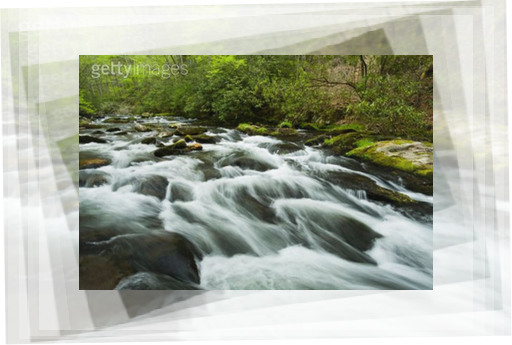
Tesol - Italy conference in Rome from Friday 19th November to Saturday 20th November. I would like to sum up my experience of my time at the 35th National Convention of Tesol Italy so that I will remember it for a long time. There were over 70 talks and presentations, but of course I couldn't attend all of them. I will give feedback on the talks that I was able to attend. I hope it will give you a little taste of what it was like to be there in person. Below is a priceless magazine souvenir from the conference, courtesy of
bighugelabs.

Like last year, I stayed at the delightful and very welcoming
Casa Betania, which is situated right next to the
SGM conference centre. Sister Serafina welcomed me back with open arms and showed me to my room. After a long train journey from Chieti I was quite happy to retire for the night. I read a booklet about the life of
Sister Scolastica, who is buried in the crypt of the church, right next to where I was staying. It was written in Italian and I was pleased that I was able to read it easily.
Talk 1
My first talk of the day was by
Jenny Dooley, teacher trainer and ELT author. The title was
"Developing communicative competence" and it was fantastic. I loved Jenny's style, presence and dramatic way of presenting. In addition, I loved her elegant LBD and choice of jewellery! She wowed her audience by being lively and very entertaining. "Activation" of the language is key to developing communicative competence, and with the use of mind maps and plans, students can be guided towards this objective. She discussed the merits of fluency over accuracy, the use of proper scaffolding, exposure to real-life language tasks, and the need to expose students to authentic materials. I agreed with everything Jenny said and it was good to be reminded of all these points.
 Talk 2
"Sociable media and language learning
Talk 2
"Sociable media and language learning" was a plenary session by
Steven L. Thorne, the renowned author and researcher. I was fascinated by his talk and his research into statistics regarding the use of virtual worlds, including Second Life, computer games, FaceBook, Twitter and WoW (World of Warcraft), which I didn't really know a lot about. He also mentioned fan fiction authors such as
Rebecca Black.
Bring the world into your classroom was a key message. A lot of theoretical background information was imparted and I learned a lot. It opened my eyes to a new world. A world which could soon become an integral part of everybody's lives.....
Talk 3
"
Good lessons: the role of flow and transformation" by
Luke Prodromou, the well known ELT author and teacher trainer. This was an entertaining and practical session, which I enjoyed very much. Luke Prodromou was able to craft the session in a very skilful way, showing us examples of lessons with students he has taught. A variety of metaphors including music, were explored in a fun and motivating manner.
 Talk4
"Language in motion:teaching with the flow"
Talk4
"Language in motion:teaching with the flow" was presented by Janet Bianchini, teacher, blogger and olive oil cultivator. She spoke about the new words coming into the English language like a fast-flowing torrent. How could teachers keep up with this ever rapid flux?


She outlined some sources where words came from, mostly from the Internet. She showed some web 2.0 tools that could be used effectively to teach, review and recycle new words. You can see her presentation
here. For some unknown reason, she didn't feel at all nervous, even though it was her first big presentation at an international conference. She just "went with the flow" and enjoyed herself to the full!
Note to presenter: Next time, maybe at IATEFL Brighton (???), she should use a remote control to control the slides so that she can walk around and participate more with the audience?
She was asked some very pertinent questions by members of the audience, including the one below:
Q How do you know which words to teach, which words will "stick"?
A. Ermm, I don't really know, I just use my intuition and see how often the emerging word is used in the papers, internet etc.
Janet stressed to her audience that because of the evolving nature of English, she had to keep herself up to date the same as everyone else. Being a native speaker does not give her an extra advantage as a lot of the new words are new to her as well. Her fave site is
www.wordspy.com.
She demonstrated a few activities such as the one below. Can you match the pairs of words taken from the Top 20 words from Word Spy?

Did you guess them correctly? Below is their definition.
Hobby bobbies
Flash mobs
Laptop zombies

I have recently found out that there is an
Abruzzo "CouchSurfing" wiki network.
Here is an informative post on "
Searching and requesting a couch".
You might be interested in this article:
50 Coolest Online Tools for Word Nerds". I think it's a very useful collection of some great sites!
Talk5
"
Shaping the language of the future via the Internet" by Yulia Sergaeva from Russia was a very informative talk, which I enjoyed immensely. She is presently doing research in
Neology and Lexical Creativity. I learned about
Urban Dictionary containing examples of newly created slang terms.

I also found out about a delightful site called
Verbotomy, where you have the chance to create a new word and definition in a
competition. I had never heard of this site before, and so I will definitely be looking into it, as it looks fascinating and I love new words!! I was surprised to hear that the average age of the people who submit definitions for new words were in their '80s. Coining neologisms is an excellent brain exercise for "silver surfers". I also love the cartoons which accompany the activities.

This excellent talk finished at 6.15pm and it was time for the special event of the evening: "La Dolce Vite", a play on "
La Dolce Vita", an evening of Italian cinema and wine tasting.
Bocca di Gabbia , from Le Marche region, was the fabulous choice of
wine and I enjoyed some glasses together with strong Parmesan cheese and lovely nibbles and canapes.
I mingled with teachers from all over Italy and abroad. I also chatted to the teachers of L'Aquila whom I had met in L'Aquila last month. It was lovely to see them again! Hopefully, I will be returning to L'Aquila in the new year to do another seminar there.
I hit the sack, very happy after a wonderful first day of events.

The following day I attended sessions until 2.15 pm. I had an action-packed and exciting morning.
Talk6
"English as a Lingua Franca: idioms as tranlingual flows" by Luke Prodromou, was a great entertaining session, and I enjoyed the focus on idiomacity, "
which by definition, is fluid and innovative and at the heart of ELF". Luke pointed out that stress and intonation must be observed for idioms to work. He also gave us some wonderful examples of what happens when students mix idioms up or don't use them appropriately.
The key to being fluent in English is "phraseological fluency". I always stress to my students that idioms, phrasal verbs and natural English (colloquial English) used in the correct context, are vital elements of becoming a proficient speaker of English. The puzzling aspect for students, however, is when an idiom is changed for fun as in "It was raining kittens and dogs!" or "That was a teacup of a storm!"
 Image source: http://www.flickr.com/photos/jbraine/2346699537/
Talk7
"Learning English through the media: from language to culture
Image source: http://www.flickr.com/photos/jbraine/2346699537/
Talk7
"Learning English through the media: from language to culture" by Roberta Facchetti from the University of Verona was another highly interesting talk. The speaker demonstrated the topic with authentic materials, showing us lots of newspaper headlines, cartoons, comic strips and advertisements, which focused on the social life and cultural aspects of the English language.
 Plenary: Talk8
"Flowing in new directions
Plenary: Talk8
"Flowing in new directions" was the wonderful talk by
David Crystal, honorary professor of linguistics, prolific writer, editor, lecturer and broadcaster on Linguistics and the English language. I sat totally engrossed for the full 45 minutes of the talk. There was no Powerpoint presentation, no great fanfare.
David Crystal stood and talked without notes, and brought his subject alive with his quietly spoken and convincing demeanour.
Language is like a river, with many new tributaries. Nothing is ever going to be the same again. Two important factors have changed everything:
the Internet and Global language. The electronic world is taking over our lives! In fact at exactly 11.55 am, David Crystal coined a new phrase, which with the age of Twitter, would become a possible new word. That newly made up word is "retesolisation". One needs to respect the power of technology!
There is a seachange of language change as I write.
I was surprised to learn that in the future, varieties of Indian English will have a massive potential effect on the English language with phrases such as "I'm knowing it!" becoming commonplace. Note the use of "I'm loving it" - this expression is now no longer frowned upon and corrected. It has become a part of our daily usage. David Crystal stressed the
plurality of the English language. We should teach this "global" English from a very early stage.
I was absolutely fascinated by the talk and it has provided me with great food for thought.
Talk 19
The final talk for me was Susanna Licciardi's session
"Teaching language in the 21st century: the next platform in education". Susanna is a teacher trainer from Italy. I enjoyed her talk very much and I was able to identify with the challenges she mentioned facing teachers with regards the new media that surround us. "
Smartphones, iPhones and iPods have broken the barrier to real communication in real time in the language classroom" Susanna explained. We also watched a very interesting video of what K12 pupils expect from their teachers - to be taught using technology, as that is the world in which they were born. There is no hiding place for teachers who refuse to adopt the new media. We have no choice but to learn about these new technologies. As David Crystal said, we are living in a "Brave New World" and we must deal with it. As teachers, though, are we ready and prepared to change the way we teach? Or will we get lost by the wayside?
Beautiful Flowing Music Rising from the Ruins
Before I left the conference, I attended a wonderful harp concert from a young girl, whose beloved harp was practically destroyed in the L'Aquila earthquake in April 2009. "Atlantide" rose again from the ashes, like the Phoenix, and I witnessed a fantastic and stunning performance from Claudia Pintaudi.

This lovely harp which had been buried under the rubble in Claudia's house for months, was for her, the symbol of rebirth. I was moved to tears. I sat amongst the brave teachers from L'Aquila, who had made me feel so at home in their city last month. The power of hope emanating from the sweet melodies being played so exquisitely by the young and beautiful harpist was something I will not forget in a long time.
 Original image of Great concert harp from http://blog.collectables-now.com/tag/musical/
Congratulations
I congratulate TESOL Italy for choosing such a topical and absolutely vital modern theme for the conference. Many thanks for providing an inspirational and wonderful event. I'm already looking forward to returning in 2011!!

Dear Marina, Rosanna and Tesol Italy team ,
I appreciated your very warm welcome. It really made me feel at home. Many thanks!
PS
You may like to read this guest post I wrote in May 2010 on
OUP ELT Blog called "
Renew the Passion and Go with the Flow!"




 Posts
Posts


